
You buy a health insurance policy, fall ill a few weeks later, and the claim is rejected. This is one of the most common surprises for first-time buyers, and the reason is usually the waiting period. Knowing how it works before you buy can save you from a big hospital bill.
This guide explains the waiting period in health insurance in simple words, with the rules that apply in India in 2026.
What is a waiting period in health insurance?
A waiting period is the time after you buy a policy during which you cannot claim for certain illnesses or treatments. You still pay the premium during this time. Once the waiting period is over, the insurer covers those illnesses as per your policy terms.
Types of waiting periods
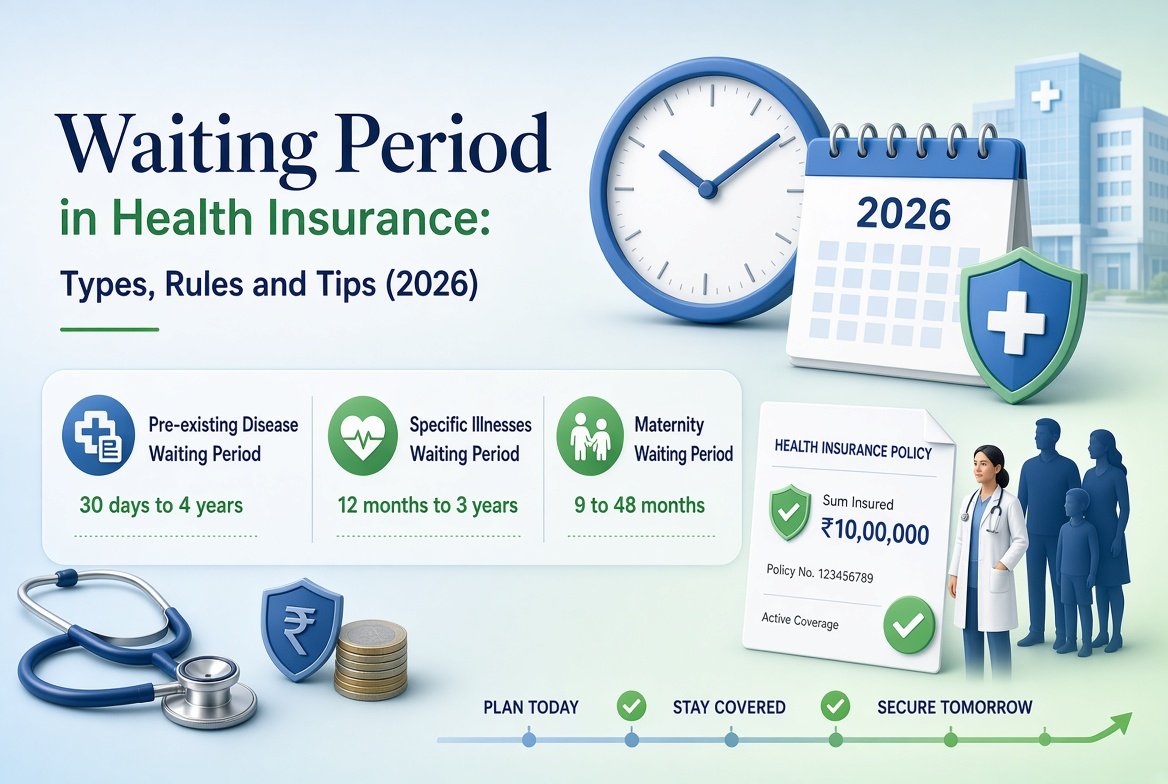
| Type | How long | What it applies to |
|---|---|---|
| Initial waiting period | Usually 30 days | Most illnesses, from the day your policy starts. Accidents are generally covered from day one. |
| Pre-existing disease (PED) | Up to 3 years (36 months) | Conditions you already had before buying the policy, such as diabetes or high blood pressure |
| Specific disease waiting period | Often 1 to 3 years | Planned treatments such as cataract, hernia or joint replacement, depending on the policy |
| Maternity waiting period | Differs by policy, often several years | Delivery and related expenses, if the plan covers maternity |
The exact days and the list of covered illnesses are different in every policy, so always check the policy wording.
Initial waiting period (30 days)
Most policies do not cover illness claims in the first 30 days. This stops people from buying insurance only after they know they need treatment. Claims for accidents are usually allowed from the first day.
Pre-existing disease waiting period
A pre-existing disease is a condition you already had, or were being treated for, before you bought the policy. As per the rules of the insurance regulator IRDAI, insurers cannot make you wait more than 36 months (3 years) for a pre-existing disease that you have declared. Earlier this limit was 4 years.
This means that if you declare a condition such as diabetes while buying a policy, you can claim for it after the waiting period of up to three years is completed, provided your policy stays active without a break.
Specific disease waiting period
Some treatments that are often planned in advance, such as cataract surgery, hernia repair, kidney stones or joint replacement, may have a waiting period of one to three years even if you did not have the problem when you bought the policy. Look for this list in the “waiting period” section of your policy.
What is the moratorium period?
The moratorium period is a protection for you. If you have kept your health insurance continuously active for 5 years (60 months), the insurer cannot reject a claim only because you did not disclose a pre-existing illness earlier. This limit was 8 years before it was reduced to 5 years for policies issued or renewed from 1 April 2024.
The moratorium does not cover everything. Proven fraud can still lead to a rejection. Also, it is not the same as a waiting period. The waiting period decides when you can claim for a disease, while the moratorium decides when your past non-disclosure can no longer be used against you.
Example: how a waiting period works
Riya, 35, buys a health policy on 1 January and declares that she has high blood pressure. The policy has a 30-day initial waiting period and a 3-year waiting period for pre-existing diseases.
- A fever in the first 30 days is not covered. After 30 days it is covered.
- A claim related to her blood pressure in the first year is not covered. After 3 years of continuous cover, it can be claimed.
- If she meets with an accident in the first month, it is generally covered.
This is a simple example. Check your own policy for exact terms.
Can you reduce or avoid waiting periods?
- Buy early. If you buy in your twenties or thirties, you finish the waiting periods before health problems start.
- Never break your renewal. If your policy lapses, the waiting periods can start again.
- Ask about waiting period reduction. Some insurers offer an add-on to shorten the waiting period for pre-existing diseases. It usually costs extra.
- Port your policy carefully. When you move to a new insurer, you can usually carry forward the waiting period you have already completed, but only up to the sum insured of your old policy.
- Compare plans. Two plans with the same premium can have very different waiting periods.
Always disclose your health conditions
When you fill the proposal form, tell the insurer about every condition and treatment of the last few years. If you hide something, the insurer may reject a claim later. It is better to accept a waiting period than to risk losing the whole claim.
What to check before you buy
- Initial waiting period (days)
- Pre-existing disease waiting period (months or years)
- List of specific diseases and their waiting periods
- Maternity waiting period, if you need it
- Whether a waiting period reduction add-on is available
- Free-look period: you usually get 30 days after you receive the policy to review it and return it if you do not agree
If you are buying for your family, our guides on family floater health insurance and how to choose the best family health insurance plan can help.
Frequently asked questions
What is the waiting period in health insurance?
It is the time after buying a policy during which you cannot claim for certain illnesses. It is usually 30 days for most illnesses and up to 3 years for pre-existing diseases.
Is an accident covered during the waiting period?
Accident claims are generally covered from the first day, but check your policy to be sure.
What is the maximum waiting period for pre-existing diseases?
As per IRDAI rules, insurers cannot set it longer than 36 months (3 years) for conditions that you have disclosed.
What is the moratorium period in health insurance?
It is 5 years of continuous cover, after which the insurer generally cannot reject a claim only for non-disclosure of a pre-existing illness.
Does the waiting period start again when I renew?
No, not if you renew on time without a break. A lapse in your policy can restart it. When you port your policy, the waiting period you have already served is usually carried over.
Is the waiting period the same in every policy?
No. The rules set a maximum, but insurers can offer shorter waiting periods. Always compare before you buy.
Final thoughts
A waiting period is not a trick. It is how insurers manage risk, and the rules protect you with fixed limits. Read the waiting period section, be honest about your health, and renew on time. For more money guides, see our Finance section.
Disclaimer: This article is for general information only and is not insurance or medical advice. Policy terms differ by insurer and rules can change, so please read your policy document and check the latest rules on the IRDAI website. See our full disclaimer.