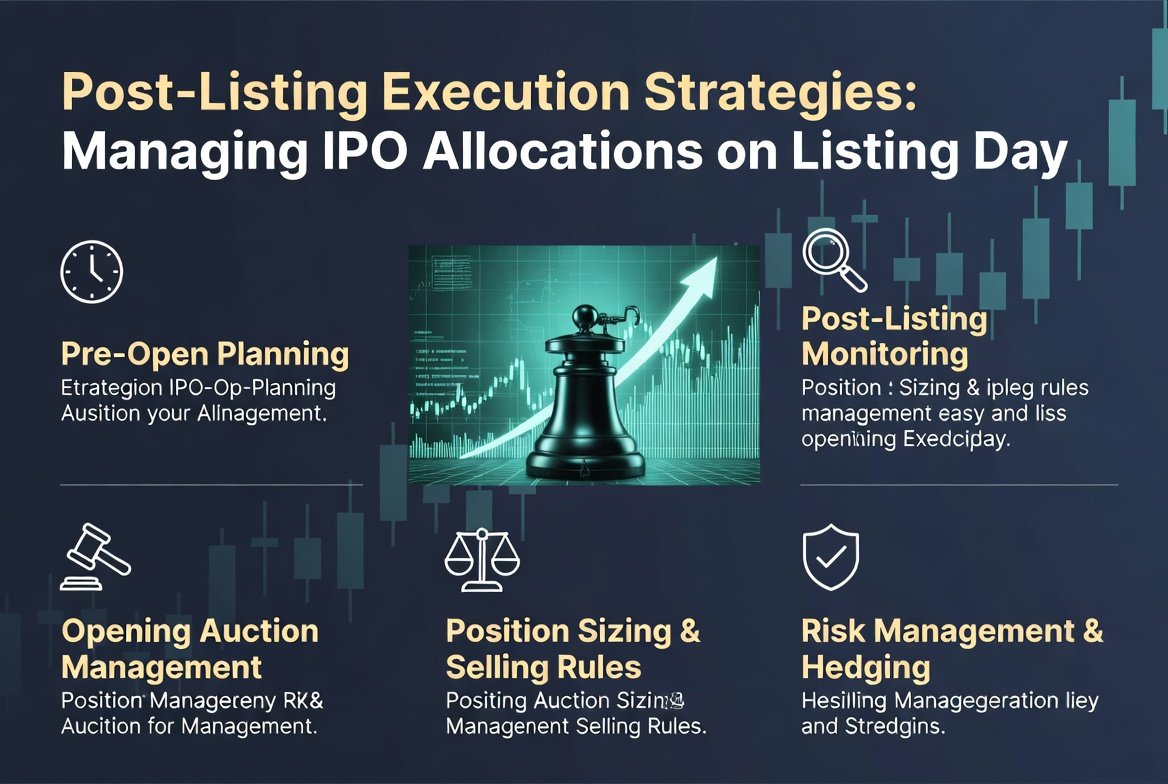
Securing a share allocation in a highly anticipated initial public offering is an exciting milestone for any retail investor. However, the true test of market discipline begins the exact moment those shares debut on the stock exchanges. Listing day is notably unpredictable, frequently marked by sharp price changes and highly emotional trade choices. Instead of depending solely on speculation, a strong performance approach is necessary to successfully handle this important session. Market participants must understand how to manage their newborn assets efficiently to protect their capital gains. Having a clear operational roadmap prevents traders from making hasty errors during the opening bell frenzy.
Establishing Exit and Retention Frameworks Before the Opening Bell
Traders must categorize their financial goals before the subscription window even opens. For individuals focused strictly on short-term listing gains, the execution plan should be straightforward and decisive. Selling the entire allocation during the pre-open session or within the first hour of regular trading is a common approach. This strategy captures the immediate demand premium without exposing the capital to intraday price reversals. To start this journey smoothly, executing a seamless demat account opening is the first vital step. Having an active account ensures your shares are delivered on time and are fully ready for immediate market liquidation.
The Strategic Power of Partial Profit Booking
Long-term wealth builders approach listing day with an entirely different perspective. Instead of selling everything immediately, a partial profit-booking model offers an excellent middle ground for smart investors. Selling half of the allocated lot allows you to recover your principal investment amount entirely. The remaining shares can then sit in your portfolio as free capital, riding the long-term growth trajectory of the enterprise. This balanced approach drastically reduces psychological stress during subsequent market corrections. Utilizing a trusted digital platform helps you execute these partial orders instantly, keeping your portfolio perfectly aligned with your risk tolerance limits.
Essential Tactical Approaches for Listing Day Success
Managing an ipo allocation successfully requires strict adherence to data-driven guidelines. Consider these core tactical execution strategies on the day of listing:
- Monitor the final Gray Market Premium trends to gauge immediate market sentiment and potential listing price directions.
- Place specific stop-loss orders immediately if you plan to hold the asset through the opening volatile hours.
- Avoid adding fresh capital to the position during the chaotic first thirty minutes of public trading.
- Check the institutional subscription numbers to understand if big market players are holding or selling out.
- Complete your digital demat account opening early to avoid any last-minute system verification delays.
Leveraging Seamless Technology for Instant Execution
The sheer speed of price movements on listing day demands the absolute best digital infrastructure available. A modern, high-performance online ecosystem ensures your orders hit the exchange servers without frustrating system lag. Traders must be able to track live market depth and modify their limit orders on the go. Platforms like HDFC Sky allow users to easily invest in F&O, Mutual Funds, and international equities from a single point. This unified connectivity means you can seamlessly transfer your ipo profits into stable, long-term wealth instruments immediately.
Achieving Sustainable Success via Disciplined Portfolio Management
Surviving the fast-paced equity market requires moving away from emotional gambling habits entirely. Every single ipo application must be treated as a calculated business decision. By using an advanced, user-friendly ipo tracking portal, investors stay updated on upcoming corporate offerings and vital allotment status dates. Retail traders have a clear competitive edge over big players when they mix highly quick software with smart technical analysis. By organizing your process, carefully handling your budgets, and using strict performance to guide your long-term wealth development journey, you can protect your financial future.