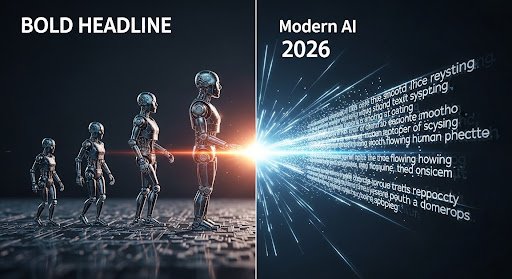
By 2026, artificial intelligence will have gone far beyond simple automation. Content creation, editing and optimization are now deeply integrated with intelligent systems that understand tone, context and intent. Among the most widely used innovations is the AI text rewriter, a tool that has evolved from basic annotation software to a sophisticated writing assistant. Businesses, students, marketers and creators now rely on these tools to increase productivity and maintain content quality.
Although technology has advanced significantly, some of the basic principles of rewriting remain unchanged. Accuracy, clarity and authenticity still determine whether rewritten content will succeed or fail. Understanding what has changed—and what continues to work—is essential for anyone using text rewriting tools in 2026.
From Simple Paraphrasing to Contextual Intelligence
In the early days, rewriting tools mostly replaced words with synonyms. The results often seemed strange or unnatural because the system lacked deep contextual understanding. The sentences were grammatically correct, but emotionally flat.
In 2026, AI text rewriter with contextual intelligence. It understands sentence structure, audience intent, and even brand voice. Instead of just changing words, it restructures entire paragraphs while preserving meaning. Modern text rewriting tool now analyze tone, detect redundancies and improve readability automatically. This shift from surface-level interpretation to intelligent rewriting is one of the biggest changes in the field.
What Changed: Smarter Language Model
The biggest change in 2026 is the intelligence behind rewriting the system. Advanced language models now process huge data sets to understand the nuances and flow of conversations. They customize content based on whether the audience is academic, professional or casual.
Modern AI text rewriter can transform formal text into conversational language and vice versa without losing clarity. Likewise, each new generation of text rewriting tools can adjust sentence complexity, optimize structure, and remove repetitive phrasing. These upgrades make the rewritten content feel less mechanical and more natural than ever before.
Improved SEO and Optimization Capabilities
Search engine optimization has also influenced the development of rewriting technology. In 2026, rewriting tools integrate SEO features that help optimize keyword placement while maintaining readability. Instead of stuffing in keywords, intelligent systems balance density and flow.
A sophisticated AI text transcriber now ensures that rewritten articles stay aligned with search intent and algorithm updates. In addition, a reliable text rewriting tool can improve meta descriptions, titles and structure for better online visibility. This combination of rewriting and optimization has become a powerful asset for digital marketers.
What Still Works: Clarity and Simplicity
Despite all the technological improvements, the basic principles of effective rewriting have not changed. Clear and simple communication is the main principle. Readers prefer content that is easy to understand and logically organized.
Even the most advanced AI copywriter cannot replace the importance of reviewing content for clarity. A high-quality transliteration tool can improve the structure, but human oversight ensures that the final result matches the purpose and audience expectations. In all industries, simplicity is better than unnecessary complexity.
Human Oversight Remains Essential

Although automation has improved dramatically, human involvement is still important. AI tools produce impressive drafts, but strategic sophistication ensures authenticity and accuracy. Over-reliance on automation can sometimes lead to subtle contextual errors.
Using an AI text writer effectively means treating it as an assistant rather than a replacement. A professional text rewriting tool increases productivity, but the final editing decisions must remain human-driven. In 2026, the most successful workflows combine artificial intelligence with human creativity.
The Rise of Personalization
A notable advance in 2026 is personalization. Rewriting tools can now instantly adapt content for different target groups. The same article can be rewritten with multiple voices for different platforms or demographics.
A modern AI copywriter can adjust terminology and structure based on audience behavior and reading patterns. Meanwhile, a dynamic text transliteration tool can localize content for different regions without losing meaning. This personalization capability has expanded the usefulness of the rewrite tool beyond simple editing.
Ethical Use and Content Integrity
As rewriting techniques become more powerful, ethical considerations become more important. Duplication of content, misinformation and abuse of AI tools can damage credibility. Responsible use ensures that rewriting enhances originality rather than diminishing it.
An advanced AI text writer should be used to improve clarity and structure, not to misrepresent information. Likewise, a professional transcription tool should support transparency and authenticity in content production. In 2026, trust is still a decisive factor in digital communication.
Speed vs Quality: Finding the Balance
One of the original advantages of rewriting tools was speed. This advantage remains strong in 2026. However, quality now matches speed more than ever. Intelligent systems produce cleaner moves with fewer corrections required.
2026’s AI transcriber delivers efficiency without compromising readability. In addition, a sophisticated text rewriting tool provides consistency in large-scale content production. Companies no longer have to choose between speed and quality – they can achieve both with the right strategy.
The Future Beyond 2026
Looking ahead, rewriting tools are likely to become even more adaptable. Emotional intelligence, voice prediction and real-time collaboration features could become standard. AI systems may soon suggest not only structural reforms, but also creative reforms.
AI text rewriter will continue to evolve as models become more context-aware and culturally appropriate. Likewise, modern text rewriting tools will expand beyond rewriting into full content optimization platforms. However, the basic principle remains unchanged: effective communication depends on clarity, relevance and authenticity.
Conclusion
AI text rewriting in 2026 represents a remarkable leap in technology. Devices are smarter, faster and more accurate than ever before. They understand context, adapt tone and support SEO strategies seamlessly. Yet, while many aspects have changed, the basic principles of good writing have remained constant.
Clarity, simplicity, ethical use and human oversight continue to define success. The development of AI transcribers shows how far technology has come, while the enduring value of a reliable transliteration tool reminds us that strong communication principles never go out of style. Ultimately, innovation works best when it supports timeless writing foundations rather than replacing them.