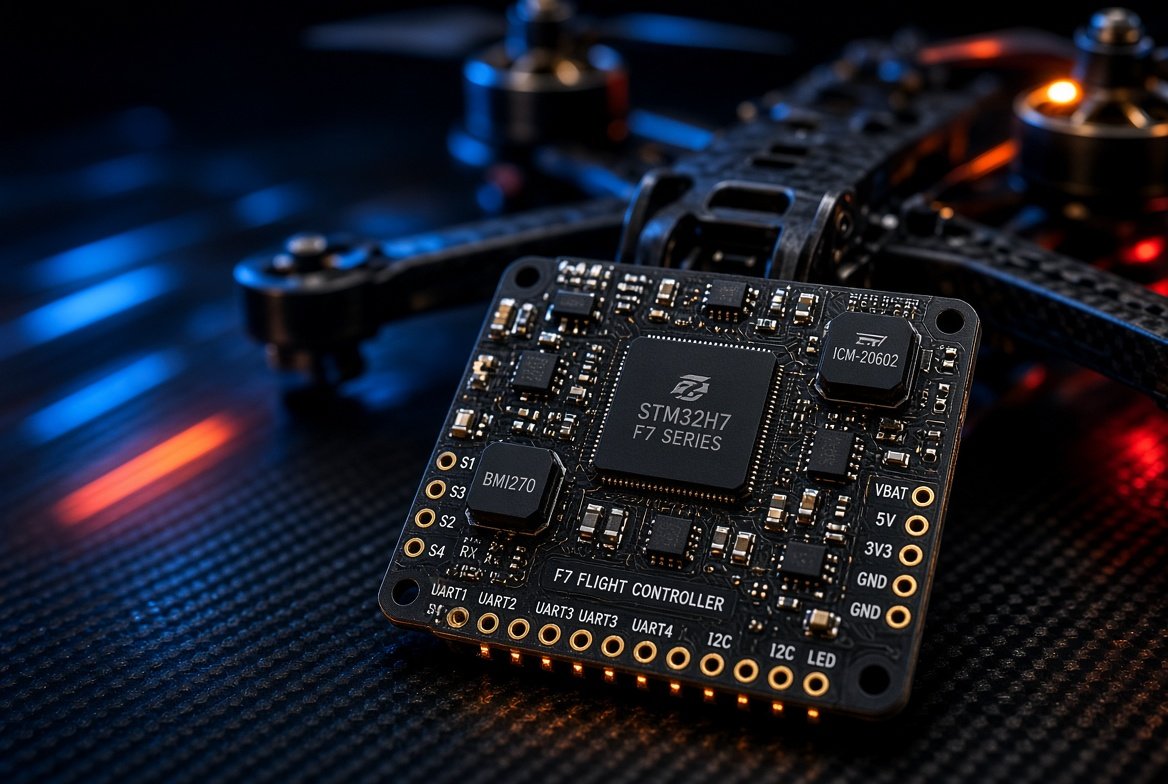
The flight controller is often considered the brain of an FPV drone. It connects different electronic components and processes data from sensors to control the aircraft’s movement. Without a properly selected and configured flight controller, even high-quality motors and ESCs cannot deliver their full potential.
For beginners, choosing a flight controller can be confusing because there are many options available with different processors, firmware support, mounting sizes, and integrated features.
Understanding the role of a flight controller and knowing what specifications matter can help pilots build more reliable and better-performing drones.
What Is an FPV Flight Controller?
A FPV flight controller (FC) is the central control board of an FPV drone. It receives information from sensors and pilot commands, then sends signals to the electronic speed controllers to adjust motor speed.
A modern FPV flight controller usually includes:
- Gyroscope
- Processor
- Firmware support
- Receiver connection
- Camera and video system connections
- OSD (On-Screen Display) support
The flight controller continuously calculates the drone’s orientation and movement, making thousands of adjustments every second to maintain stability.
Without a properly functioning FC, an FPV drone cannot perform controlled flight.
Why Choosing the Right Flight Controller Matters
Different drone builds have different requirements.
A racing drone needs:
- Fast processing speed
- Low latency response
- Lightweight design
A freestyle drone requires:
- Reliable performance
- Good vibration handling
- Flexible configuration options
A long-range drone may prioritize:
- Efficient power usage
- GPS compatibility
- Additional connectivity options
Choosing a flight controller designed for your specific application improves flight performance and reduces setup problems.
Understanding Flight Controller Processors
The processor is one of the most important specifications of a flight controller.
Modern FPV flight controllers commonly use processors from the STM32 family.
Popular processors include:
- F405
- F722
- H743
F405 Flight Controllers
F405 processors are popular because they provide:
- Good performance
- Affordable pricing
- Compatibility with many builds
They are suitable for many beginner and intermediate FPV drones.
F722 Flight Controllers
F722 boards offer:
- Faster processing
- More UART ports
- Better support for advanced setups
They are commonly used by experienced pilots who need additional flexibility.
H743 Flight Controllers
H743 processors provide even higher performance and are suitable for complex builds requiring more processing power.
Flight Controller Size and Mounting Options
Flight controllers come in different sizes, including:
- 16×16 mm
- 20×20 mm
- 25×25 mm
- 30×30 mm
- AIO boards
The correct size depends on your drone frame.
30×30 mm Flight Controllers
These are commonly used in traditional 5-inch builds because they provide enough space for additional components.
20×20 mm Flight Controllers
These are popular for lightweight and compact drones.
AIO Flight Controllers
All-in-one boards combine multiple components, such as:
- Flight controller
- ESC
- Receiver
They are often used in smaller builds where saving weight and space is important.
Important Features to Consider
When selecting an FPV flight controller, specifications should match your build requirements.
Important features include:
UART Ports
UART ports allow communication with external devices, including:
- Receivers
- GPS modules
- Digital video systems
- Telemetry devices
More UART ports provide greater flexibility for advanced builds.
Firmware Compatibility
Most modern FPV flight controllers support popular firmware platforms.
The most common choice among FPV pilots is:
- Betaflight
Firmware compatibility ensures that pilots can configure settings, tune performance, and customize flight characteristics.
Gyroscope Quality
The gyroscope measures drone movement and vibration.
A high-quality gyro can improve:
- Flight smoothness
- Stability
- Control response
This is especially important for freestyle and cinematic flying.
Choosing a Flight Controller for Racing Drones
Racing drones require fast response and reliability.
Important considerations include:
- Low weight
- Fast processor
- Stable firmware support
- Durable construction
Racing pilots often prefer lightweight electronics because every gram affects acceleration and handling.
Choosing a Flight Controller for Freestyle Drones
Freestyle drones require a balance between performance and durability.
A good freestyle flight controller should provide:
- Reliable processing
- Strong vibration filtering
- Multiple connection options
- Stable operation during aggressive maneuvers
Freestyle pilots frequently perform:
- Flips
- Rolls
- High-speed dives
- Power loops
Therefore, electronic reliability is extremely important.
Matching Flight Controller With Other Components
A common mistake among beginners is selecting a flight controller separately from the rest of the build.
A complete FPV system includes:
- Frame
- Motors
- ESC
- Battery
- Receiver
- Video system
The flight controller should be compatible with all other components.
For example:
A high-power 6S freestyle drone requires an FC that can handle advanced configurations, while a lightweight indoor drone may need a smaller integrated solution.
The Importance of Quality FPV Electronics
FPV drones experience strong vibration, high current loads, and frequent movement changes. Electronic components must be reliable to maintain stable performance.
Specialized FPV suppliers such as MEPSKING focus on drone components and provide pilots with different hardware options for various applications, making it easier to compare specifications before building a drone.
Technical information, compatibility details, and product guidance are valuable resources when selecting electronic components.
Common Flight Controller Selection Mistakes
Buying Based Only on Price
The cheapest option may lack important features or long-term reliability.
Ignoring Future Upgrades
A board with limited ports may become restrictive when adding GPS, digital video systems, or additional accessories.
Choosing an Oversized Board
A powerful flight controller is not always better if it adds unnecessary weight.
Not Checking Compatibility
Always confirm compatibility with:
- ESC
- Receiver
- Firmware
- Frame size
Conclusion
Selecting the right flight controller is one of the most important decisions when building an FPV drone. The correct board improves stability, reliability, and overall flight performance.
By understanding processor options, mounting sizes, firmware support, and compatibility requirements, pilots can choose a flight controller that matches their flying style and technical needs.
Whether building a racing drone, freestyle quad, or long-range platform, a reliable flight controller provides the foundation for a better FPV experience.